What is a tracker?
A music tracker is a sequencer that shows a song as a grid. Time runs down the screen one row at a time, each column is an instrument, and every note is written as text, like C-4. Instead of dragging blocks around a timeline, you type or tap notes into rows, press play, and watch the song scroll past.
Trackers started on home computers in the 1980s and grew up with the demoscene and video game music. LastTrack is a tracker built for phones and for writing with friends.
How a tracker works
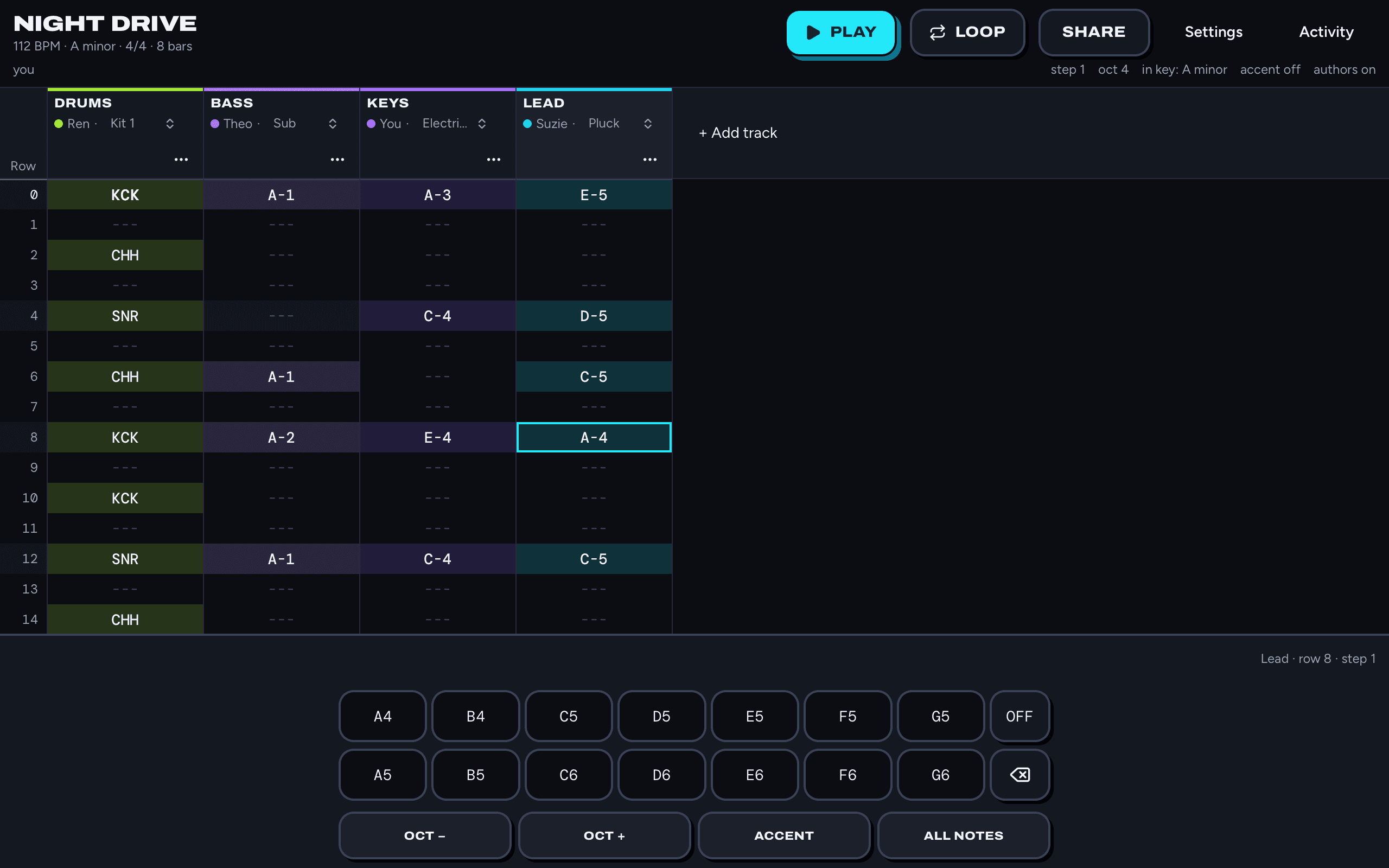
- Rows are steps in time. The song plays from the top row down. A bar is usually 16 rows, so each row is a sixteenth note, and the tempo sets how fast the rows go by.
- Columns are tracks. Each track plays one instrument, such as drums, bass, keys or a lead, and plays one note at a time. Add another track for chords.
- Notes are written as text. C-4 means the note C in octave 4, and C#4 is C sharp. Drum hits use short names like KCK for kick and SNR for snare. Three dashes (---) mean nothing new happens on that row.
- A note keeps sounding until the next note on that track, or until an OFF on its own row stops it.
Because everything sits on a grid, a tracker is quick to read once it clicks. You can see a whole beat at a glance, spot the exact row where the snare lands, and fix one note without touching anything else.
A short history of trackers
The idea of stepping through samples by number showed up early in the 1980s on the Fairlight CMI, a high-end sampling workstation. Home computers soon had music programs with a vertical, row-by-row layout, like Chris Hülsbeck's SoundMonitor on the Commodore 64, though these played the computer's own synthesizer chip rather than recorded samples.
- 1987Karsten Obarski's Ultimate Soundtracker, released by EAS Computer Technik for the Amiga, is the first tracker, and gives trackers their name. It plays four channels of 8-bit samples, the limit of the Amiga's Paula sound chip, labelled melody, accompany, bass and percussions.
- 1989Shareware clones such as NoiseTracker appear, and OctaMED on the Amiga pushes to eight channels.
- 1990ProTracker arrives on the Amiga and becomes one of the best-known trackers. Songs are saved as module files (MOD) that hold both the notes and the samples.
- 1994Musicians move to the PC, where sound cards allow more channels: Scream Tracker 3 (32 channels) and FastTracker 2 (16 channels).
- 1995Impulse Tracker brings 64 channels to the PC.
- 1997OpenMPT, a tracker for Windows, first appears.
- 2002Renoise brings the tracker layout to modern music production on the PC.
- 2020The Polyend Tracker becomes the first standalone hardware tracker, a box with the whole tracker workflow built in.
Trackers were at the heart of the demoscene, where people make real-time audio and visual demos, and demo parties still hold tracker music competitions. Tracker music also shipped in games of the late 1990s and early 2000s, including the Unreal series, Deus Ex, Crusader: No Remorse, Jazz Jackrabbit and Uplink.
Trackers found new homes too: LittleSoundDJ turned the original Game Boy into a tracker, and chiptune trackers such as FamiTracker, Deflemask and Furnace write music for the sound chips of classic consoles and computers. Because a module file carries its own samples, anyone could open a song and see exactly how it was made, and generations of musicians taught themselves that way.
LastTrack: a tracker for your phone
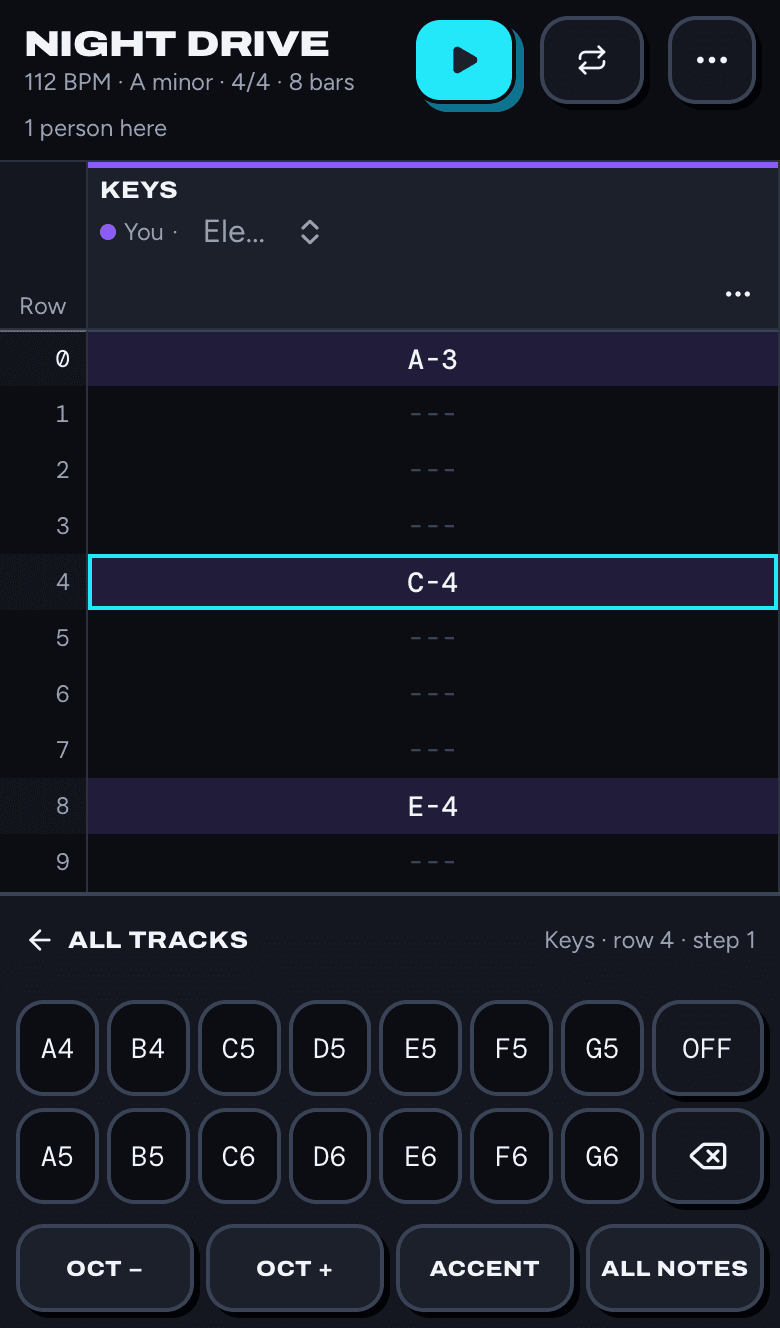
LastTrack keeps the tracker grid and makes it work with your thumbs:
- A keypad instead of a keyboard. Tap a row, then tap a note. The keypad shows only the notes in your song's key, so everything you tap fits. Drum tracks show kick, snare, hats and the rest of the kit.
- Made together. Share a link and friends add their own tracks from their phones, and everyone hears the same song as it grows.
- Battles. Everyone writes a song to the same theme against the clock, then votes blind for their favorites.
- Nothing to install. It runs in the browser, and the sound is made on your device.
New to all this? Learn how to use LastTrack, or start a collab and try it.